Glue treatment for
Varicose Veins

Under ultrasound guidance a small catheter (tube) is inserted inside diseased vein and very small quantity (0.1 ml) of glue is released per 3 cm length of the vein. This causes immediate closure of the diseased vein.

The procedure is absolutely painless, but for a small needle prick in your lower thigh or upper leg needed to insert a catheter in to your vein.

Laser uses heat energy instead of glue to treat the diseased veins. When compared to laser, glue treatment is relatively painless and procedure time is significantly lesser. Unlike all other modes of treatment, compression bandages and stockings are not needed after Venaseal treatment.

If the procedure is done by an expert Vascular Surgeon, chance of your varicose veins coming back (recurrence) is less than 5 %. The results are similar to a properly done laser treatment of varicose veins. Ultrasound evaluation by the Surgeon performing the procedure and good understanding of your venous anatomy (Vein mapping) prior to the procedure is the key for a successful outcome.

Not all varicose veins can be treated by this technique and most of the time other modalities like hook phlebectomy and foam sclerotherapy are used to achieve best results. There is a wide variation in the venous network in legs of every individual and so is the plan of treatment.

Only an expert vascular surgeon can decide right treatment plan for your venous disease.

Kanika

After coming here, within a single year, I forgot all my pains and was able to concentrate on my studies. I really don’t know how to thank you in words. Am really blessed and thankful to have a doctor like you

ARE YOU FINDING IT HARD TO USE YOUR VARICOSE VEINS STOCKINGS?

Difficult to apply

These can be quite tight and difficulty in putting them on is one reason for poor
compliance. For these stockings applicators are of great help! With these
devices even elderly patients living alone can apply themselves

Finding them v hot!

Tis is another reason for poor compliance. In tropical climates due to humidity the patients slowly avoid using them. Device which can be intermittently removable and reapplied may be of help here.

Keeping them clean

You will require two sets. Get clear instructions to how they should be cleaned and washed. Even a small tear due to sharp nails can damage. So nails must be trimmed to minimal. Utmost efforts should be made to keep the foot portion of the stockings free of damage.

Unable to tolerate them!

Another difficult to address problem. Can downgrade to lower compression. Not very ideal.
Itching!

Can be due to various reasons. From allergy to the ingredients of stockings to underlying skin problems. They can be addressed on case by case basis

DISEASES OF VEINS

The function of the veins is to take the de-oxygenated blood from the periphery/ various organs of the body and take it back to the heart/ lung for oxygen on. Veins are thin walled tubes that we commonly see on the back of our hands or on feet.

Veins are present all over the body. The veins in the just below the skin are called Superficial veins. There is another set of larger veins that runs deep between the muscles of the legs, abdomen, arms, neck etc. these veins are called Deep Veins.


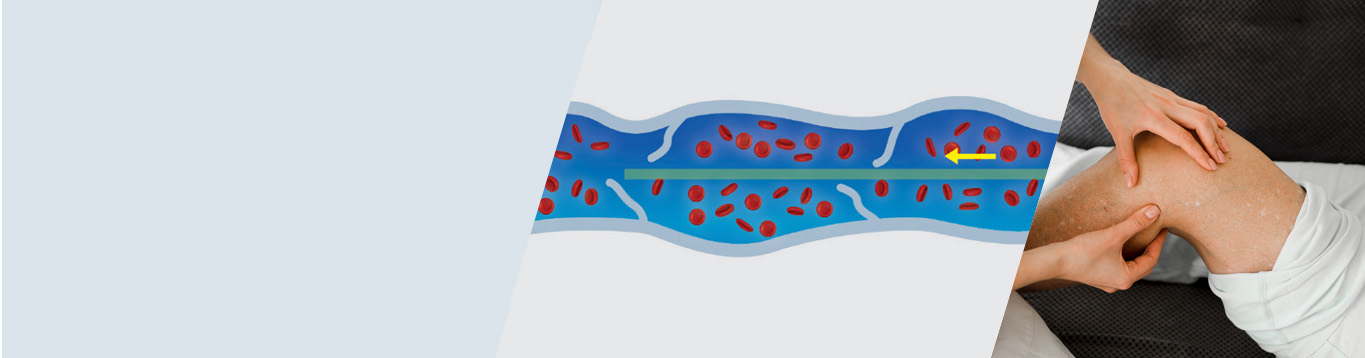
All of these veins have valves that permit
unidirectional flow of blood from the periphery to the heart.

The most common diseases of the veins
involve either a failure of these valves or
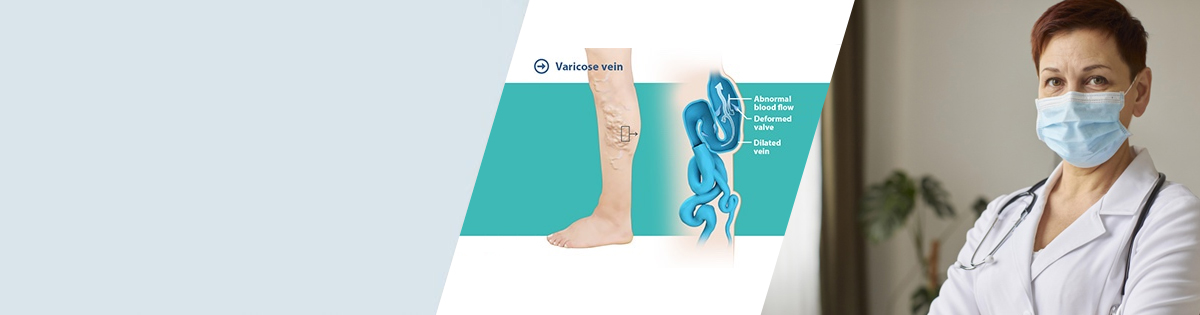
clotting of blood in these veins. Varicose veins is a condition that arises from failure of valves that can happen due to a variety of reasons.

Varicose veins is probably the most common venous disease. Similarly, clotting of blood in the veins is known as Venous Thrombosis. This clotting or thrombosis can happen in any of the veins, but is frequently seen after i.v. injections. Occasionally though, this clotting can happen in the deep venous segments of the leg, known as Deep Vein Thrombosis (DVT)

DVT is a potentially lethal disease as these
clots can migrate to the lungs and can be life threatening in the acute stage and lifestylethreatening in the chronic stage.

ARTERIOVENOUS MALFORMATION

Arteriovenous malformation

Many a times it can have no symptoms but people may experience pain, swelling, bleeding depending on the location of AVM.

Malformation can be arterial, venous or lymphatic. It can also have combination of any three blood vessels.

In children they are commonly seen in face which usually disappears by age of 7.

Surface malformations can be easily diagnose with simple sonography or colour doppler. More complex malformation may require MRI, CT scan or angiography.

Most malformations now a days can be treated without surgery. There are some special injections(embolization) available to treat various malformations.

Commonest form of treatment for surface venous malformation is foam sclerotherapy.

They can also be treated with alcohol, bleomycin ( chemical embolization)
PVA particles or glue

There are some special coils are available to treat more complex malformations.
Many patients require multiple sittings to treat malformations depending on site and extent of the lesion.

Prof.R.C Sreekumar

Prof. Sreekumar did his MBBS from Medical College, Alappuza and his MS from Calicut Medical College in 2000. He did his training in Vascular Surgery from Sree Chitra Tirunal Institute of Medical Sciences (SCTIMST), Thiruvanthapuram in 2001. He was Head of the Department of Vascular Surgery at SCTIMST from 2017 to 2019 and is currently Professor and heads division of Vascular Surgery at Medical College Thiruvanthapuram. He was the past secretary of Vascular Society of India and he was also the past president of IMA, Thiruvanthapuram. His area of interests are advanced vein treatments, limb salvage procedures and treatment of aortic aneurysms.

Dr Muralikrishna Nekkanti

dr-muralikrishna-nekkanti

Dr Muralikrishna Nekkanti has over a decade experience in vascular surgery with a specific focus and passion for aortic aneurysm management and scarless endovenous management of varicose veins. Dr Muralikrishna completed his MBBS in 2002, MS General surgery in 2006, and DNB Peripheral Vascular and Endovascular surgery in 2009. Apart from thse, Dr Muralikrishna has a fellowship in advanced vascular and endovascular surgery from the prestigious Paracelsus Medical University, Salzburg, Austria. Dr Muralikrishna was instrumental in the establishment of the Department of Vascular Surgery at the Sri Jayadeva Institute of Cardiovascular Sciences as well as Rangadore Memorial Hospital. Dr Muralikrishna specializes in arterio-venous fistulas for dialysis patients apart from the entire range of vascular procedures and management. Dr Muralikrishna’s research interest is in stem cell therapy leading to national and international publications, conference presentations and posters. Currently Dr Muralikrishna works as Professor and Head of Vascular Surgery Department at Sri Jayadeva Institute of Cardiovascular sciences.

Dr Vimal Iype

Vascular and endovascular surgeon trained and experienced in dealing with vascular ailments commonly varicose veins,dvt,peripheral arterial occlusive diseases(POAD), Aneurysms, carotid stenosis , dilaysis access solutions.Has experience in all modalities of treatment – open and endovascular .with over 12 years experience at a high volume centre .

Dr. Manish N Raval

Practising vascular surgeon in Ahmedabad from last 20 years with special interest in deep vein thrombosis, AV malformation, varicose veins, vascular injuries and AV access. I am attached to institute of kidney diseases and research centre from last 20 years and other hospitals like Apollo, Sterling hospital, Jivraj Mehta hospital.

DR. VIJAY THAKORE

Dr. Vijay Thakore is a senior, qualified Vascular and Endovascular Surgeon in clinical practice for last 25 years. He is trained at a National Premiere Institute i.e Sree Chitra Tirunal Institue for medical sciences, Trivandrum in the year 1996. He has received many Fellowships from the various part of the world like USA, UK, Germany, Australia, and Singapore.