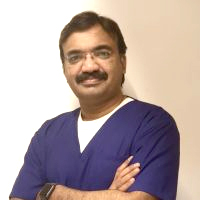
Dr Muralikrishna Nekkanti

dr-muralikrishna-nekkanti

Dr Muralikrishna Nekkanti has over a decade experience in vascular surgery with a specific focus and passion for aortic aneurysm management and scarless endovenous management of varicose veins. Dr Muralikrishna completed his MBBS in 2002, MS General surgery in 2006, and DNB Peripheral Vascular and Endovascular surgery in 2009. Apart from thse, Dr Muralikrishna has a fellowship in advanced vascular and endovascular surgery from the prestigious Paracelsus Medical University, Salzburg, Austria. Dr Muralikrishna was instrumental in the establishment of the Department of Vascular Surgery at the Sri Jayadeva Institute of Cardiovascular Sciences as well as Rangadore Memorial Hospital. Dr Muralikrishna specializes in arterio-venous fistulas for dialysis patients apart from the entire range of vascular procedures and management. Dr Muralikrishna’s research interest is in stem cell therapy leading to national and international publications, conference presentations and posters. Currently Dr Muralikrishna works as Professor and Head of Vascular Surgery Department at Sri Jayadeva Institute of Cardiovascular sciences.

Dr Vimal Iype

Vascular and endovascular surgeon trained and experienced in dealing with vascular ailments commonly varicose veins,dvt,peripheral arterial occlusive diseases(POAD), Aneurysms, carotid stenosis , dilaysis access solutions.Has experience in all modalities of treatment – open and endovascular .with over 12 years experience at a high volume centre .

Varicose Veins

Large, tortuous unsightly engorged veins on the legs. Sometimes foot swelling (oedema), pain, cramps, itching, blackening, bleeding and ulcer in later stage

Squatting exercises, Medical compression stockings and few medications might help you only if you have mild symptoms. It can also prevent the progression of the disease. But these measures will not cure this condition. If you have severe symptoms like large painful veins, bleeding, skin darkening, itching or ulcer, a long- term solution would require some surgical or endovenous treatment.

A Color doppler scan of your legs is the most reliable test to determine the severity of varicose veins.

Open surgery, which was the standard treatment in the past, has been largely replaced by endovenous (Minimally invasive) therapies with excellent long-term results and very less recurrence. Endovenous therapies are now the recommended modality for treatment of all types of varicose veins.

They are minimally invasive (typically done as day care) - like Laser, Radiofrequency (RFA), Glue treatment (Venaseal), Sclerotherapy, MOCA etc. In endovenous therapies, diseased veins are treated by a small tube that are inserted in to the diseased vein, through a small needle puncture. Here either heat energy, medications or a medical glue is delivered precisely in to the vein and the culprit veins are selectively treated and cured.

Laser treatment does not require hospital stay. Patients may return to normal activities in two days.

No. We at Veinexperts use the best-in-class German Lasers.

These are all endovenous treatments. Each one uses different energy source. We at Veinexperts give you the best option possible to cure your varicose veins after a detailed evaluation.

There are no restrictions in general after any endovenous treatments but you will have to wear medical compression stockings for 6 weeks after the procedure. You will have a check scan of the treated veins from our OPD after 1 week, 4weeks, 6months and 1year respectively.

For small and medium sized varicose veins sclerotherapy can be considered as an outpatient procedure. This involves injection of a sclerosant solution under ultrasound guidance into the varicose veins. This causes scarring in the vein and destruction of the diseased veins in your legs.

Large or medium sized bunches of veins, that cannot be treated by any of the above modalities are removed surgically by technique through a few 2 to 3 mm cuts.

It involves a 2 to 3 cm incision in the upper thigh and division of diseased thigh vein in the groin after spinal or general anaesthesia. Typically, the whole of the diseased thigh vein is removed by “stripping”. You can get back to work in a week or two and maximum hospitalization required will be 2 days.

Apart from being an open surgical procedure, the surgery involves anesthesia and slightly delays return to normal activities

With presence of newer technologies, there are only few situations when you need an open surgery. Our team at Vein experts are very experienced Vascular and Endovascular surgeons have adopted advanced technology into open surgery. We offer excellent results after surgery with very cosmetical and involves micro incisions.

On most instances any single modality may not be enough to achieve a complete cure of your varicose veins. Our expert team would prepare a detailed “vein mapping” and plan a personalised plan for each patient. Typically, any treatment would involve a combination of Laser / RFA / Glue with phlebectomy and sclerotherpy to achieve best results.

After endovenous treatments you can start walking 2 hours after the procedure is done. Usually one can return to work usually after 2-3 days after endovenous ablations and 7-10 days after open surgery.

Definitely yes. Modern treatments of varicose veins usually have a success rate of more than 90-95% if done by experts. We need to thoroughly examine your legs, investigate and we at Veinexperts would advise you about the best option for you.